Given an idea for a compelling, valuable initiative, how do you shape the work?
Many organizations treat that as a technical detail. Hand off a project to a development team, and wait for the results to come back.
But new product development is inherently complex—we learn about both the problem and the solution as we solve the problem. Fortunately, it’s possible to structure work so that discovery happens early in development, when it’s easiest and cheapest.
The key move? Vertical slices, at every level of detail.
Organizing work in slices of value (features, user stories, and scenarios) provides a way to probe complexity early, shows incremental value throughout development, and makes it easier to respond to change and learning, ensuring a high-value result.
In this workshop, we’ll cover…
- Complexity & why vertical slicing benefits developers & the business
- How to structure an initiative in vertical slices at multiple levels
- Feature Mining: a collaborative technique for finding the best first slice of any big idea
- What makes a good user story
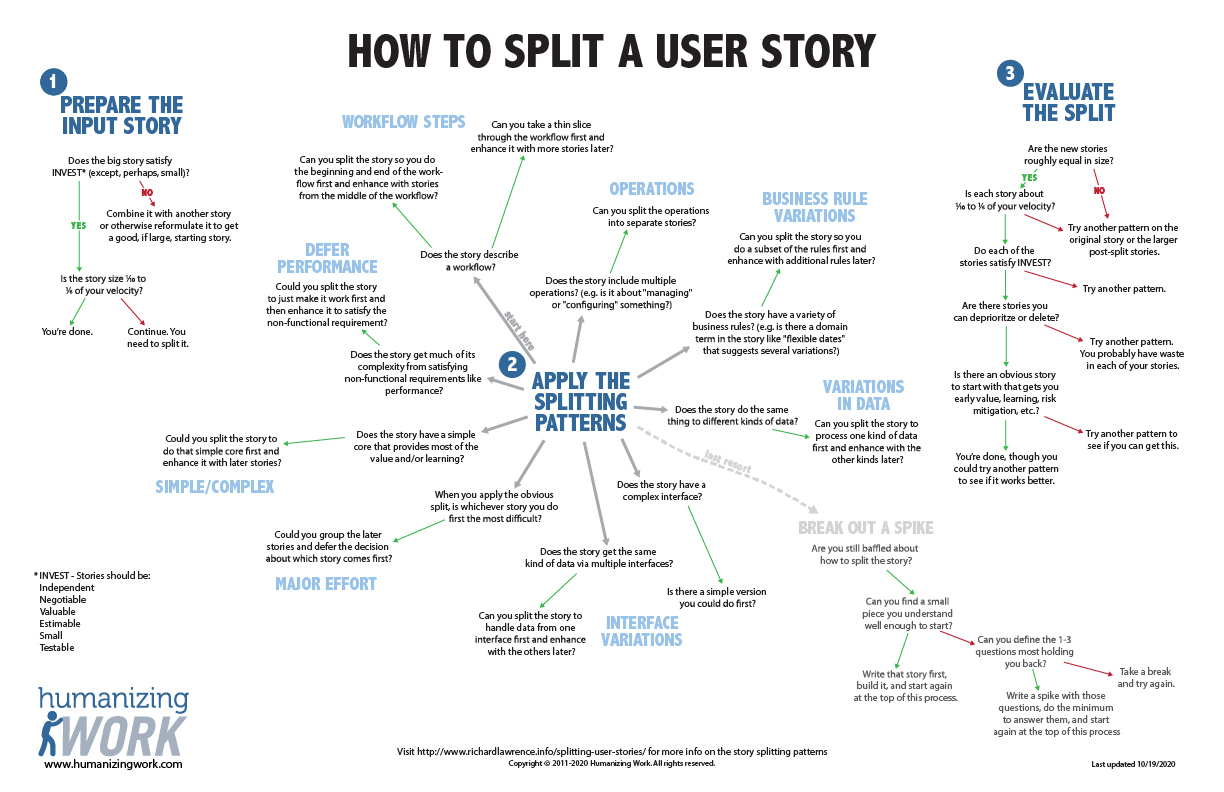
- Splitting features & big stories into good, small stories
- Common story splitting challenges & how to address them
- How different roles contribute at each stage in the process
Like all Humanizing Work workshops, this one is highly interactive and hands-on. We won’t just talk about ideas and skills, we’ll practice them, using both carefully-crafted practice examples and your own real examples. Everything in the course is designed around how adults learn. (Hint: it’s definitely not from watching someone read PowerPoint slides to you.)
Who should attend
Slicing work well is a team sport. The best results come when people who understand the problem and people who understand the solution collaborate to find valuable slices. That’s why this workshop works best with a cross-functional group:
- Product Owners & Product Managers. You’ll learn to structure initiatives so the most important questions get answered early. You’ll also get better at communicating “why this slice, why now” to stakeholders and teams.
- Developers & Tech Leads. You’ll see how to influence scope and sequence in ways that reduce technical risk and make the work more predictable. You’ll gain shared language for pushing back on “all or nothing” thinking.
- Scrum Masters & Agile Coaches. You’ll get practical techniques for facilitating slicing conversations and helping teams move past “we can’t split that” roadblocks.
- Anyone involved in planning complex work. Architects, designers, analysts, team leads: if you shape what gets built and when, vertical slicing skills will make you more effective.
A side benefit: teams who attend together often report that the shared vocabulary and collaborative exercises improve their day-to-day communication long after the workshop ends.
Common questions
“We already slice our work. Why do we need training on it?” Most teams slice by technical layer (build the database, then the API, then the UI) or by convenience (whatever’s easiest to finish). Slicing for value is different. Each slice should deliver something a user could actually use. It’s a learnable skill, but it doesn’t happen automatically.
“Our work is too complex to slice small.” That’s usually a sign that slicing skills would help more, not less. The techniques in this workshop are specifically designed for complex, uncertain work. They help you find the probe that will teach you the most with the least investment.
“Won’t slicing small create more overhead?” It can feel that way at first, but teams who get good at it find the opposite: less rework, fewer surprises, and faster overall delivery. Small slices surface problems early, when they’re cheap to fix.
“We tried slicing before and ended up with slices that didn’t make sense on their own.” That’s a common failure mode when teams slice mechanically. The fix is a combination of good vertical slices and a hierarchical backlog. Small stories build up into features, and features build up into initiatives. That structure provides context for the small slices so each one makes sense as part of the larger whole.
“Can we just work on our real examples instead of using practice examples?” The best learning outcomes happen with both. Practice examples let you focus on the skills themselves without organizational baggage getting in the way. They also expose you to a range of scenarios broader than your current work. Then we turn to your real examples so you can apply what you’ve learned to your actual challenges.
Bring this workshop to your organization
This workshop is offered exclusively as a private workshop for your team or organization, either in-person or live online using Zoom and Miro.
We’ll tailor the examples and emphasis to your context, and you’ll leave with shared skills and vocabulary ready to use right away on your current initiatives. Teams who learn to slice well probe complexity earlier, show value sooner, and adapt more easily when things change.
Contact us to discuss how this workshop could fit your needs.