Learn in month one what most initiatives discover in month nine.
Big initiatives fail late because the hardest, most important work gets scheduled last. Status stays green right up until it doesn’t. Our CAPED approach (Complexity-Aware Planning, Estimation, and Delivery) front-loads the complex parts of an initiative, so you get early value, early learning, and commitments that survive contact with reality.
Bring CAPED to your initiative Train your people in CAPED
What we hear on first calls
- “Everyone told me we were on track. By the time I knew we weren’t, my options were gone.”
- “We adopted agile expecting faster delivery and better visibility. We got standups.”
- “Every estimate is padded, and the dates still slip.”
- “The quarterly plan was stale by week three.”
- “My teams are busy, but I can’t get a straight answer about when anything will land.”
Maybe those sound familiar. None of this means your people are failing. These are the predictable results of planning complex work as if it were merely complicated. That distinction, and what to do about it, is the heart of our CAPED approach.
Plan for complexity instead of pretending it away
Most planning approaches front-load detail. CAPED front-loads learning: resolve the riskiest, most complex parts of an initiative first, so the detailed plan you eventually commit to is one you can trust. It’s not just about learning, though. Complexity and value correlate, so working complex-first also delivers real value as quickly as possible.
1Strategic PlanningMap Core Complexity
Identify the real complexity before committing to an initiative.
2Active PlanningEarn Green
Resolve uncertainty through structured experiments before detailed planning.
3Analytical PlanningFinalize Details
Turn what you’ve learned into a realistic, risk-aware execution plan.
4Iterative ExecutionDeliver Results
Deliver in valuable slices while staying adaptable to what you discover.
Pixar gets a film’s story right by actually creating rough early versions and iterating on them. Likewise, architect Frank Gehry designed buildings from models long before final blueprints. CAPED makes the same move systematic for product development. And it’s especially powerful in regulated industries, where predictability is non-negotiable but uncertainty is inevitable.
Two ways to put CAPED to work
Bring us into a high-stakes initiative
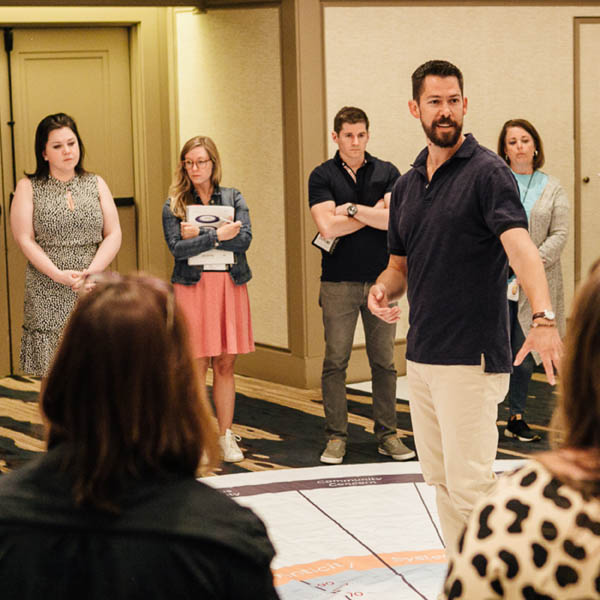
We work alongside your leaders and teams on an initiative that matters: mapping the complexity, finding the first valuable slices, and building a forecast you can defend. You get the outcome, and your people learn the approach by doing it.

Build CAPED capability in your people
Two foundation courses for organizations and teams, role certifications for product owners, team leaders, and facilitators, and a consultant track for building CAPED capability in-house. One curriculum, from a single team to your whole organization.
Where CAPED is working
A few examples from different contexts:
- A medical device company uses CAPED to get the learning and innovation of agile alongside the stability and compliance their regulated, hardware-plus-software products require.
- An AI-native startup runs its product development on CAPED and is getting to validated value and learning faster. Complexity Mapping, Feature Mining, and small probes are everyday practice.
- An enterprise IT organization adopted CAPED for its biggest initiative after team-level agile changes weren’t touching the real constraints. What used to be late surprises are now deliberate early discoveries, made while changing course is still cheap.
- A hardware and software product company starts every new initiative with CAPED and is seeing better collaboration across disciplines and faster time to value.
A recent client put it this way:
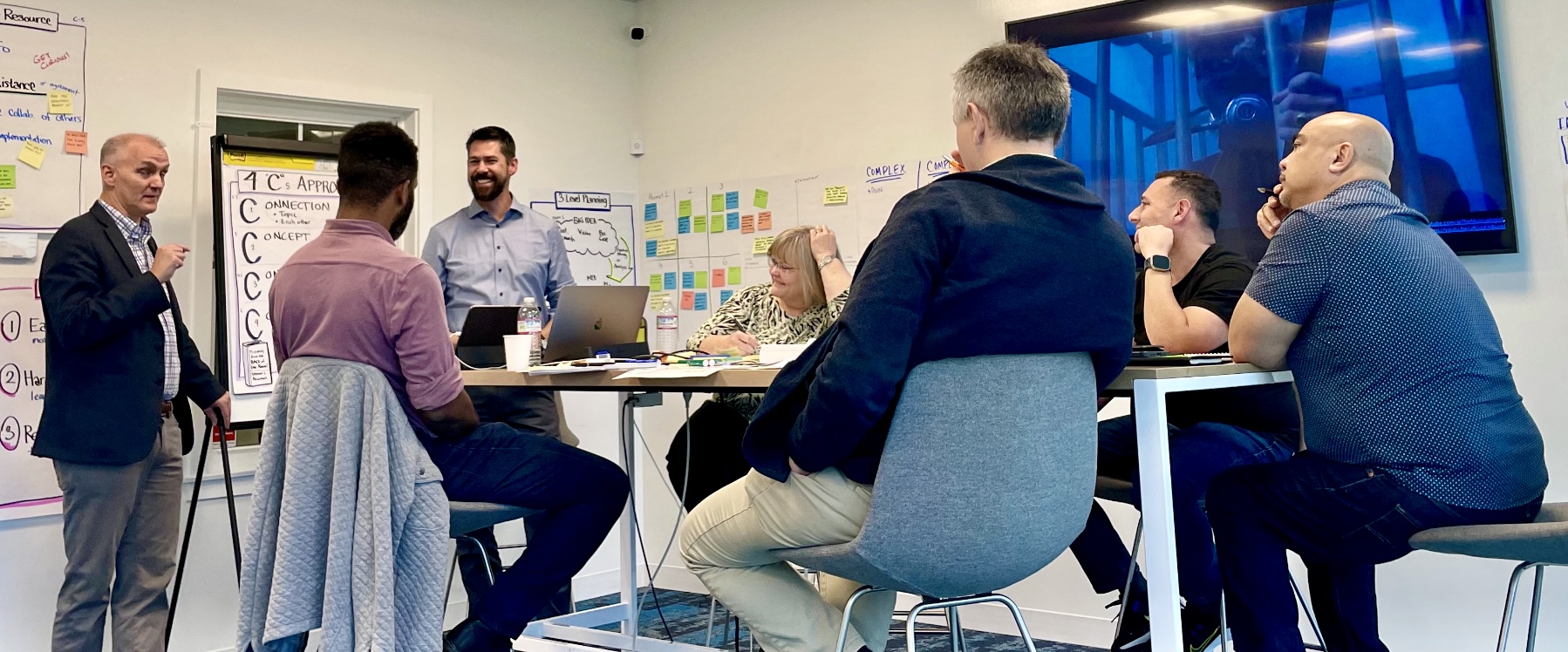
When we brought you in, I thought we’d just get some new processes and things would get a little more efficient. What I got from the training was a whole new way to relate to the work and the people doing it. It’s completely changed how I see my job and how effective I am at doing it.
Built from two decades in the field
CAPED wasn’t invented on a whiteboard. Richard Lawrence and Peter Green distilled it from twenty years of patterns that consistently worked around and within agile teams, from leading Adobe’s agile transformation to training and coaching hundreds of client organizations. Richard literally wrote the book on behavior-driven development with Cucumber. And the Humanizing Work “How to Split a User Story” flowchart has been downloaded over a million times and translated into 13 languages.
Not ready to talk? Start with the free stuff.
The Humanizing Work Show, our Key Ideas of the Week newsletter, and the Library cover CAPED techniques in depth. Teams are already using our free guides, like the Guide to Splitting User Stories, on their own to improve how they plan and deliver.
Talk it through with us
Bring us the initiative you’re worried about or the capability gap you’re trying to close. And not with a sales team (we don’t have one): the call you book below goes straight to us. Our intro calls with new clients often feel much more like a free coaching session than a sales call, and you’ll leave with useful next steps either way.